
Telecom regulator Trai on Monday recommended about 39 per cent reduction in the reserve or floor price for the sale of spectrum for mobile services, including the latest 5G offering, as it looked to match revenue expectations with the industry's paying capacity. With large swathes of spectrum remaining unsold in the last two auctions, the Telecom Regulatory Authority of India (Trai) recommended to the government for selling airwaves in all existing bands of 700 MHz, 800 MHz, 900 MHz, 1800 MHz, 2100 MHz, 2300 MHz, 2500 MHz and new slots of 600 MHz, 3300-3670 MHz and 24.25-28.5 GHz. It has suggested a lower reserve price for all bands, compared to the prices proposed in the previous recommendations in 2018.

After the Reserve Bank of India restricted the Sri Guru Raghavendra Co-operative Bank from doing business with immediate effect and capped the withdrawal limit at Rs 35,000, depositors on Tuesday queued up outside the bank's branches in Bengaluru. The regulatory body said the bank will continue to undertake banking business with restrictions until its financial position improves.

This is the last lot of payments that telcos will make towards deferred spectrum liabilities, as the Union Cabinet had late last year approved a two-year moratorium on such spectrum payment dues.

Prosus-backed fintech firm PayU is set to acquire India's earliest payment gateway BillDesk in an all-cash transaction of $4.7 billion. This will be the largest acquisition in India's digital payments space. The deal will also give exit to investors General Atlantic, TA Associates, Temasek, Clearstone Ventures, and Visa. The proposed acquisition will help PayU, the payments and fintech business of Prosus which operates in more than 20 markets, become one of the leading online payment providers globally by total payment volume (TPV).

TRAI said the two companies failed to fulfill roll-out obligations and their merger was in violation of rules.

The Supreme Court on Friday issued notice on a petition filed by Telecom Regulatory Authority of India challenging an order of TDSAT holding that the regulatory body had no authority to adjudicate on disputes raised by a service provider.

The Department of Telecommunications (DoT) will finalise its internal view on the Telecom Regulatory Authority of India (Trai's) recommendations, which was given in May last year, on mergers and acquisitions, spectrum allocation, spectrum sharing and other licencing aspects by the end of this month, a senior official from the department said.
Successful bidders will have to pay 25 per cent of the amount upfront for sub 1 GHz, and 50 per cent upfront for higher frequency bands.

Zomato has the potential to be an equally important milestone for Indian equity markets, notes Akash Prakash.

In a development that may help jailed former Telecom Minister's A Raja's defence in court, the telecom regulator has informed the CBI that Trai did not recommend the auction of 2G spectrum in 2007, implying that there was no loss to the exchequer in the award of licences.

Rocket Boys offer an overwhelming experience to me and many others who saw Homi Bhabha in action at Trombay, observes Dr K S Parthasarathy, former Secretary, Atomic Energy Regulatory Board.
Reliance Infrastructure (R-Infra), an Anil Dhirubhai Ambani Group company, is on the warpath with the state electricity regulator. Stung by the Maharashtra Electricity Regulatory Commission's (MERC's) decision to invite expressions of interest (EoIs) for the distribution of power to Mumbai's suburbs, R-Infra is examining the possibility of legal action.
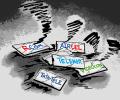
While smart boys like the Ruias of Essar, Ajay Piramal, Max India promoter Analjit Singh laughed all the way to the bank, the Tatas, Anil Ambani, Malaysian tycoon T Ananda Krishna of Maxis (which invested in Aircel), Sistema, and Norway's Telenor burnt their fingers, notes Surajeet Das Gupta.

It will help in reducing the turnaround time.

India may adopt norms similar to the US Federal Reserve model, which regulates conglomerate-led banks in the country.
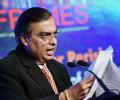
Trai has said the three operators were "intentionally denying and delaying" the provision of points of interconnects (PoIs) to Jio, "only to restrict a new entrant thus violating the terms and conditions of licence and regulations of the Authority which also caused a lot of inconvenience to the consumers."

The fear of another scam pushed the government into a rather long period of so-called 'policy paralysis'. To play it safe, the price of spectrum in all subsequent auctions was benchmarked to the high 3G rates, says Surajeet Das Gupta.
The Department of Telecommunications (DoT) is likely to reject the telecom regulator's proposal to charge operators holding excess spectrum at a rate determined on the basis of the ongoing 3G bids.

Given how the Telecom Regulatory Authority of India's (Trai's) recommendations on 2G spectrum will hit telecom firms, it's not surprising that telecom stocks have plunged. Of course, the fun and games have only begun since it is up to Telecom Minister A Raja to decide whether to accept the recommendations, which ones to accept, and when to accept.
Amidst the controversial sale of stake by two new telecom operators, Swan and Unitech, at a huge premium, the Telecom Regulatory Authority of India on Thursday recommended a three-year lock-in period for stake sale by companies, which have recently got licences, in a bid to prevent them from making windfall gains overnight.

Bharti will have to deal with 15 different regulatory regimes in Africa as opposed to just one in India.
Mobile television allows the consumers to watch live as well as pre-recorded television content on a mobile handset using a specialised mobile television broadcasting technology. Currently, only video clips can be downloaded on mobile handsets.

The Indian regulatory framework forced Citi to hibernate -- contrary to the claim that it never sleeps!
The operators are willing to accept auction of second generation spectrum beyond what has been contracted. According to them, they are allowed to have spectrum up to 10 Mhz.
Responding to queries from the Central Vigilance Commission amid allegations from political parties that Rs 50,000 crore (Rs 500 billion) was squandered in distribution of spectrum, telecom ministry said it had gone by the book and had done nothing wrong.
The department of telecommunication has so far considered applications for telecom licences that were received till September 25, 2007, and is yet to take a decision on those that came between September 25 and October 1. This had led to widespread speculation that the applications after September 26 would not be taken up at all and there would be a cap in that sense.
Dubai-headquartered Baer Capital Partners is planning to launch 2 India-centric hedge funds this year. The two funds - Beacon India Opportunities Fund with a corpus of $400 million and the $100 million Beacon India Growth Fund - will invest in listed companies. It is also planning an exclusive $100 million FMCG fund. These funds will invest across sectors including IT, pharma, FMCG, banks and auto. It has got approval from Sebi. These funds will not involve momentum trading.

A group of officials from the National Treasury and the South African Reserve Bank ) are in India to meet officials from the finance ministry, Reserve Bank and market regulator Securities and Exchange Board of India to discuss regulatory matters related to the deal.
The Telecom Regulatory Authority of India is recommending the cancellation of sports broadcaster ESPN STAR Sports' downlinking licence for non-compliance with the DTH platform's pricing formula.TRAI's proposed action follows its direction and a show cause notice to ESPN Software India in the last two months asking it to fall in line with its DTH pricing formula.
Cable TV operators can register under the Cable Television Network (Regulation) Act, 1995, to provide Internet Protocol Television services without requiring any licence, the Telecom Regulatory Authority of India has said. In its recommendations, TRAI has also said that the IPTV operators are required to register as cable operators to provide services in the country.
"We always prefer long-term regulatory policies as we have to plan our businesses for long-term," Arun Sarin, the outgoing CEO of UK-based Vodafone Group, one of the world's largest mobile operators, said here.

Vodafone Idea Ltd (VIL) CEO Ravinder Takkar did some plain speaking. In an analyst call after its quarterly results recently, Takkar said that the main stumbling block to raising fresh capital from investors is "pricing" - telecom tariffs, in other words. Nine months ago, the telecom company's board had cleared a proposal for raising Rs 25,000 crore from investors, after the promoters made it clear that they were not ready to pump in more money. But potential investors are concerned that without clarity on tariff hikes (there have been none for more than 18 months) they might just lose their money. The lack of visibility on raising tariffs has also impelled VIL to request the Department of Telecom (DoT) for a fresh reprieve by extending the two-year moratorium on paying its spectrum instalment of Rs 8,200 crore for another year till FY23.
Ask for file notings on dual spectrum, new licence issues.
The department of telecom (DoT) on Friday announced a set of rules for granting telecom licences and allocating spectrum that is likely to impact GSM-technology service providers like Bharti Airtel and Vodafone Essar, among others.
State-owned Mahangar Telephone Nigam's (MTNL) ambitious drive to become a major player in the internet protocol TV (IPTV) services sector is facing a roadblock. IPTV is a technology that uses telephone lines to provide TV programming to viewers.
They should keep themselves out of the race for the time being and wait for a better time, suggests a recent report by research firm Strategy Analytics. Foreign operators like AT&T, Deutsche Telecom, NTT Docomo and others who have been eyeing the domestic market for a long time now finally got a chance to enter world's fastest growing telecom market but looking at the current 3G auction policy, it is advisable for them not to participate in the race, it said.
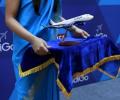
Bharti Airtel, the country's largest mobile operator, has already joined the global Seamless Alliance to provide in-flight connectivity.

The policy proposes a single-window platform for facilitation of the Indian software product industry, to help fast-track legal and regulatory issues over import and export, as well as setting up and winding up enterprises.

Analysts at rating agency ICRA say the debt level of the telecom companies is very high and the ecosystem for the premium band is not in place.
The Telecom Regulatory Authority of India's (Trai) decision to stop issuing new licences for district-level operators or category 'C' players has effectively shut the door on smaller Internet service providers (ISPs) interested in setting up shop. Those who have moved on to category 'B' or state-level operations, too, are feeling the heat as they have to compete with the likes of Reliance, Bharti Airtel, BSNL, VSNL and Sify.
